
How Long Before You See Results From a Wrinkle Relaxer?
Quick Answer: Most people notice the first softening around day three or four, with the treated muscles continuing to relax over the next week to ten days. Full effect is generally visible by the two-week mark, which is why providers ask patients to hold off judging their results — or booking a touch-up — until then. The exact pace depends on the area treated, the dose used, and how your own muscle tissue responds. Results are temporary, typically lasting a few months before the muscle activity gradually returns to normal.
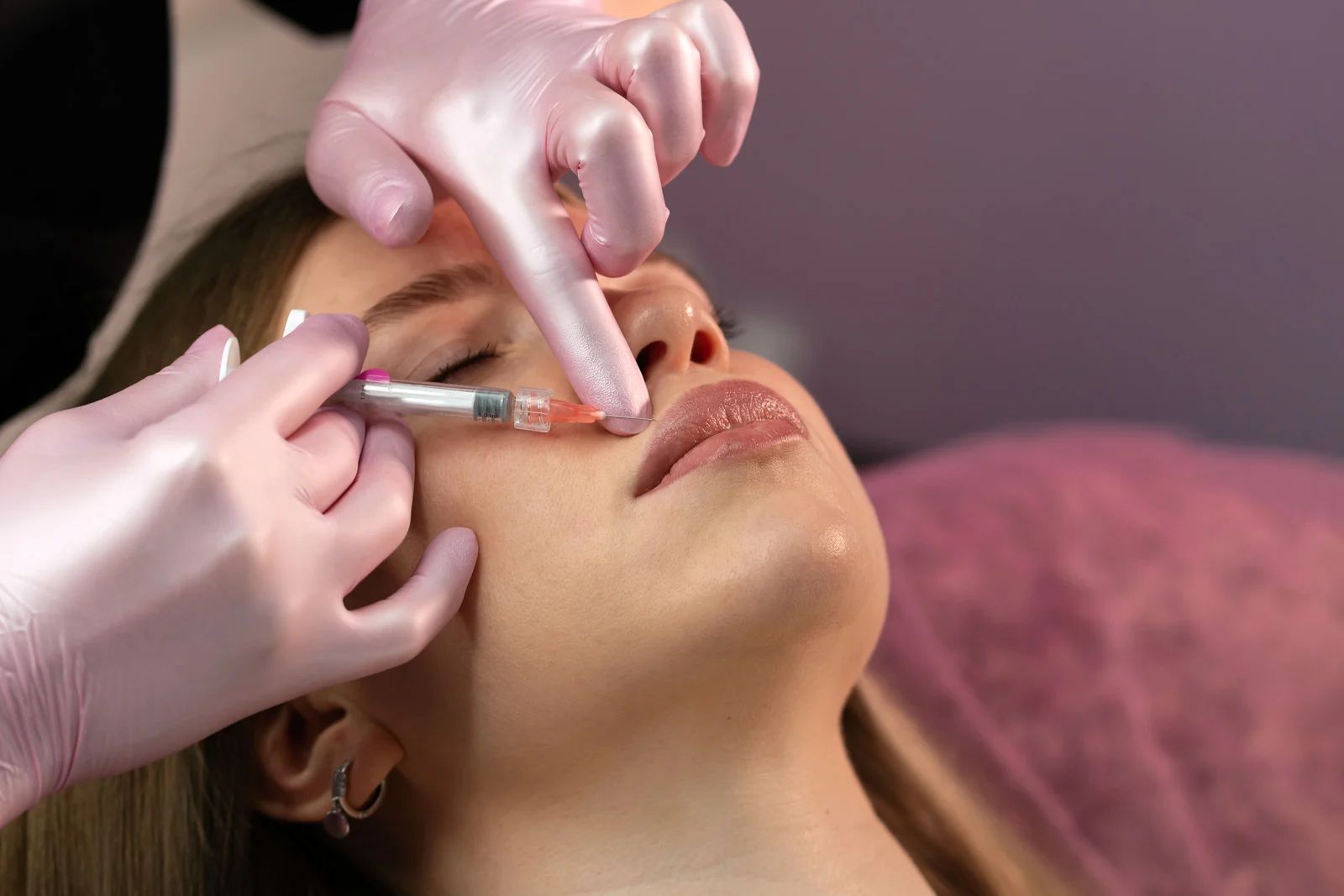
You booked the appointment, sat through the fifteen-minute visit, and drove home checking your forehead in the rearview mirror the whole way. By the next morning, you're standing at the bathroom sink under bright light, raising your eyebrows on purpose, looking for the lines to be gone. They're not. Not yet, anyway. That gap between "I just got treated" and "I can see a difference" trips up first-timers and repeat patients alike, and it's the single biggest source of confusion around wrinkle relaxer injections.
The reason is simple. Neuromodulator treatments don't work like a filler, where volume shows up the moment the product is placed. They work by gradually interrupting the nerve signal that tells a muscle to contract, and your body takes a few days to catch up with that process. Knowing the actual mechanics of the timeline, instead of the internet's vague "it takes a while," makes the waiting period a lot less unsettling and helps you plan treatments around events with real accuracy.
What's Happening in the First Few Days
The Toxin Has To Reach The Nerve Endings Before Anything Changes On Your Face
Once injected, the product needs time to bind to the nerve terminals that control the targeted muscle. This isn't instantaneous. Most people report no visible change at all for the first 24 to 48 hours, which is normal and not a sign that the treatment didn't work.
Movement Starts To Soften Before It Disappears
Somewhere around day three or four, many people notice they can't raise their eyebrows quite as high, or that a frown doesn't dig in the same way it used to. This is the earliest visible sign that the neuromodulator is doing its job. The change tends to be partial at this stage — the muscle is weakening, not yet fully relaxed.
Area Matters More Than People Expect
Smaller, thinner muscles, like the ones between the eyebrows, tend to show change a bit faster than broader muscle groups like the forehead. If you're treating more than one area, don't be surprised if one spot looks noticeably softer before another one catches up.
When to Expect the Full Effect
Two Weeks Is The Number Providers Use For A Reason
Clinical guidance from the American Society of Plastic Surgeons notes that visible results typically begin within a few days, with the full effect generally apparent within about one to two weeks. Many practices, including the service page for this exact treatment, describe results appearing as early as three to four days with the complete effect settling in by around day 14. That range exists because muscle response speed varies from person to person.
What "Full Effect" Actually Looks Like
By this point, the treated muscle should be at its most relaxed state for this cycle. Fine lines caused by repeated movement — the ones that show up when you frown, squint, or raise your brows — are typically at their softest. Static lines, the ones already etched into resting skin from years of movement, may improve somewhat but don't always fully disappear with a neuromodulator alone, since those are a separate concern from muscle activity.
Why Your Provider Wants You To Wait Before Judging The Result
Booking a touch-up appointment at day five or six, before the treatment has had time to settle, is one of the more common reasons people end up with uneven results. A muscle that looks like it's still moving on day six might be completely relaxed by day twelve. Most providers ask patients to wait the full two weeks before requesting any adjustment, precisely so the assessment reflects where the treatment actually landed rather than where it happened to be mid-process.
The First 24 Hours: Aftercare That Actually Affects Your Timeline
Tip: Stay upright and skip the face-touching for the rest of the day after your appointment. Avoid lying face-down, getting a facial or massage, or applying heavy pressure to the treated area for about 24 hours. Rubbing or pressing on freshly injected muscle can theoretically encourage the product to shift toward nearby muscles before it's fully bound in place, which can affect how evenly your results develop.
The rest of the first day is fairly unremarkable by design. There's no anesthesia involved and no real downtime — most people go straight back to work, errands, or the rest of their afternoon. Mild redness or small bumps at the injection sites usually fade within an hour or two.
Some clinics recommend light facial movement in the first hour, raising your eyebrows or frowning on purpose a few times, on the theory that it may help the product settle into the targeted muscle. That practice is more common than it is strictly proven. Either way, it won't hurt to do it.
Why Results Aren't Identical From One Person to the Next
Muscle mass and strength play a real role. Someone with stronger, more developed facial muscles — often the case in people who've never been treated before, or who have naturally expressive faces — may need a slightly longer window to see the full effect, and the treatment may not last quite as long as it does for someone with a lighter muscle base.
Metabolism affects both onset and duration. A faster metabolic rate can mean the product breaks down a bit sooner, which shows up as both a quicker fade at the end of the cycle and, for some people, a shorter runway to peak effect. This varies enough between individuals that it's not something a provider can predict with precision ahead of time.
Treatment history changes the pattern, too. People who've had several rounds of wrinkle relaxer injections often report that later results seem to arrive faster and last longer than their first treatment did. This tracks with general clinical observation that repeated treatment can lead to some thinning of the targeted muscle, which may mean less product is needed to reach a similar effect over time. But individual experience still varies, and a fast timeline on your third treatment is no guarantee for your fourth.
When It's Worth Reaching Out to Your Provider
Warning:
Mild, even softening across the treated area is expected. Real asymmetry — one eyebrow noticeably higher than the other, a heavy or drooping eyelid, or a smile that pulls unevenly — is not something to just wait out. These signs are uncommon, but if they show up in the days after treatment, contact your provider rather than assuming it will correct itself. Most timing-related concerns are easy to address once your provider can see exactly what's happening, and catching it early makes any adjustment simpler.
It's worth separating a slow-developing result from an uneven one. A treatment that simply hasn't reached day 14 yet will look mild and largely symmetrical, just not at full strength. A treatment worth flagging looks different side to side, or affects an area or function — like fully closing an eye — that wasn't part of the plan. If you're ever unsure which category you're looking at, a quick photo sent to your provider is usually enough for them to confirm you're still inside the normal waiting window.
Planning Around the Timeline
Once you know the shape of the curve — a soft start around day three, meaningful movement by the end of week one, full effect by day fourteen — the practical question becomes timing. Anyone booking a treatment ahead of a wedding, reunion, or photographed event should be working backward from that two-week mark, not from the appointment date itself. Scheduling with only a few days of buffer is one of the more common regrets people mention after the fact, simply because the treatment hadn't finished developing yet.
The fade at the other end of the cycle follows a similarly gradual pattern. Movement doesn't return all at once; it tends to creep back in slowly, often starting in the areas with the strongest muscles first. A lot of patients choose to rebook around the time they notice that first hint of movement returning, rather than waiting until the effect is fully gone, and that timing tends to keep results steadier from one cycle to the next.
Frequently Asked Questions
How long after a wrinkle relaxer injection can I expect to see any change at all?
Most people notice the earliest signs around three to four days, though this varies by area. Seeing nothing in the first 48 hours is normal. Still nothing after a full week is worth a provider check-in.
Is it normal for one side of my face to relax faster than the other?
Some early unevenness is common, since each side rarely responds at the same pace. It usually balances by two weeks. A persistent difference past that point, or actual drooping, is worth mentioning to your provider.
Why do some providers say full results take a week and others say two weeks?
Both come from real clinical observation, and individual response speed varies enough to produce a range. Some patients peak by day seven; many improve through day fourteen. Providers quote the longer end to set fair expectations.
Can I speed up how quickly my wrinkle relaxer takes effect?
There's no reliable way to accelerate the toxin binding to nerve endings. Light facial movement early on is sometimes suggested, but avoiding rubbing, heavy exercise, and face-down positions matters more. Patience remains the most dependable approach.
How long will the results last once they fully develop?
Most people see results last roughly three to four months, with some closer to five, particularly after repeated treatments. Duration varies with the area, dose, and metabolism. Movement returns gradually as the effect wears off, not suddenly.
Should I wait the full two weeks before deciding if I need a touch-up?
Yes, and for good reason. A muscle still moving at day six is often mid-process, not under-treated, and adjusting too early risks over-correction. After the full two weeks, discuss next steps with your provider.
Understanding the Wait Makes the Whole Process Easier
The waiting period after a wrinkle relaxer treatment tends to unsettle patients mostly because nobody explains what happens beneath the surface during those first two weeks. Once you understand that the smoothing unfolds gradually by design, a flat forehead on day two stops feeling like a failed treatment and starts looking like an early checkpoint. The real read on your results comes closer to day ten or eleven, when the muscle has had a genuine chance to settle.
That kind of steady, informed guidance is part of how Simply Revived Aesthetics
approaches every wrinkle relaxer appointment across Waukesha County, WI. With several
years of experience, Beth walks each client through a realistic day-by-day timeline before the injections begin, so there is no mystery about what day three, day ten, or day thirty should look like. Understanding the shape of that curve ahead of time is what turns the wait from an anxious guess into a predictable, manageable stretch.